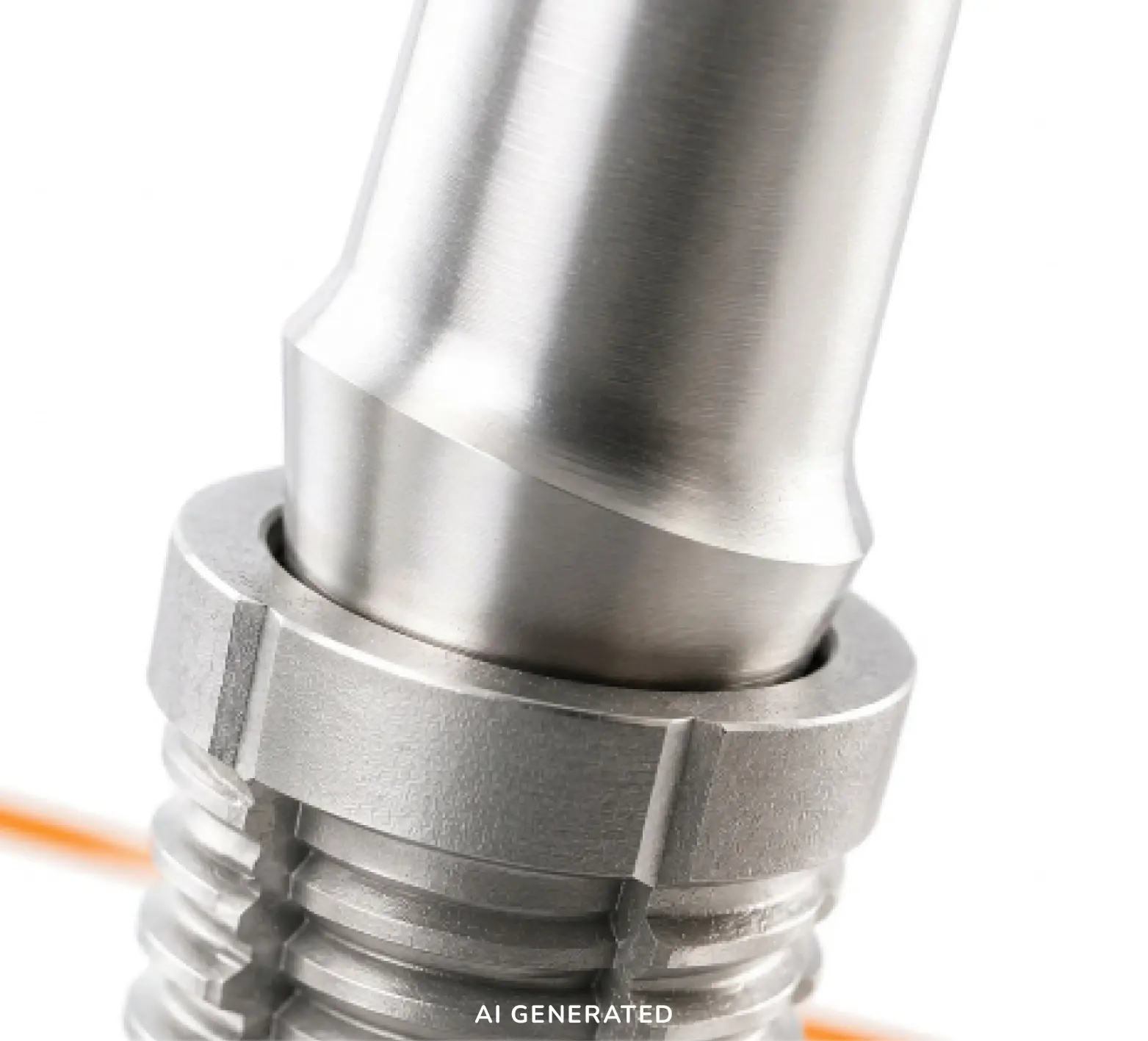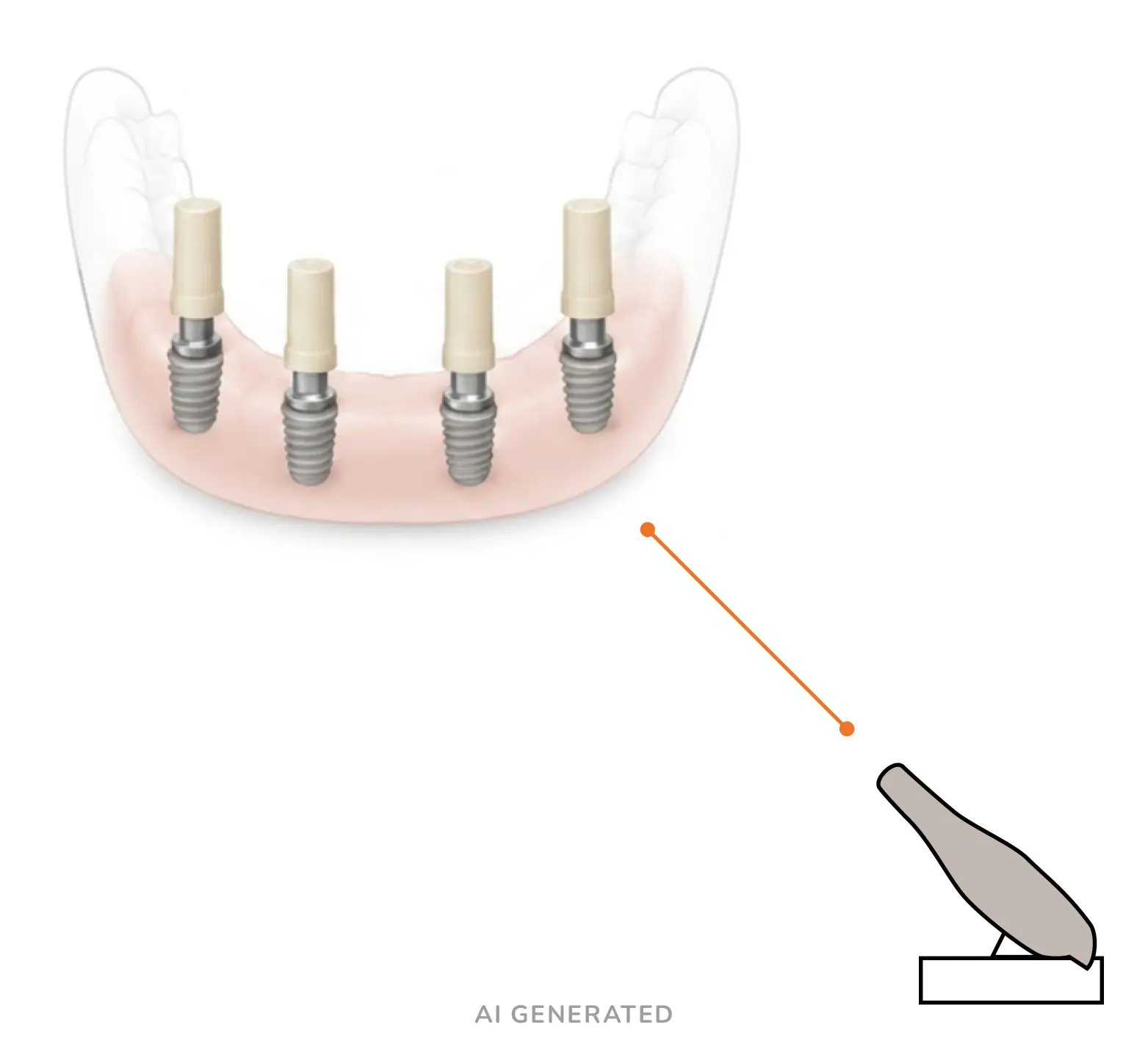
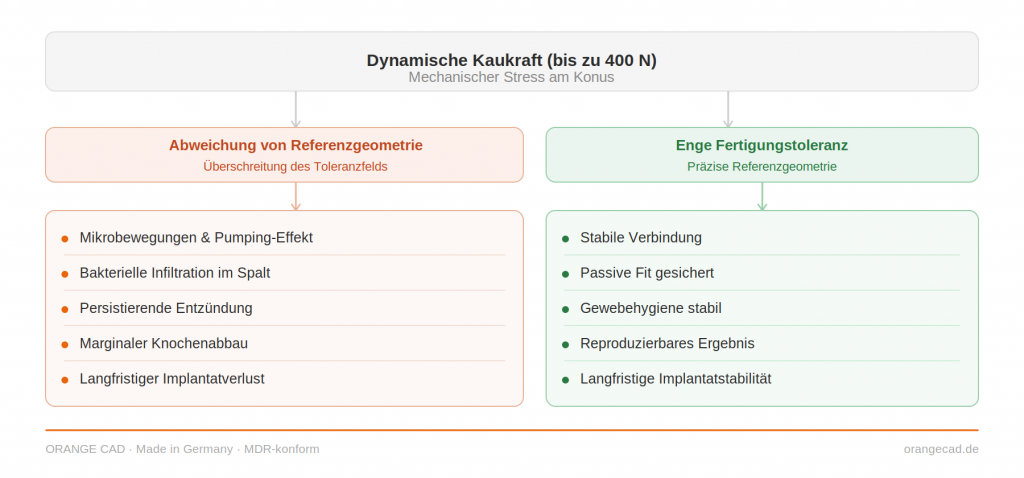
300 to 400 newtons. That is the amount of force generated during chewing in the posterior region. Undamped, cyclical, over years – and transmitted directly to the connection between implant and abutment. The consequences that imprecise manufacturing tolerances can have are well documented today.
For the dental technician this means: every prosthetic construction is a static component under dynamic alternating loading. If the geometry of the anti-rotation feature or of the cone angle deviates from the reference geometry, this is not without consequences. And these are biologically risky and mechanically measurable.
Pumping effect: what happens at the interface
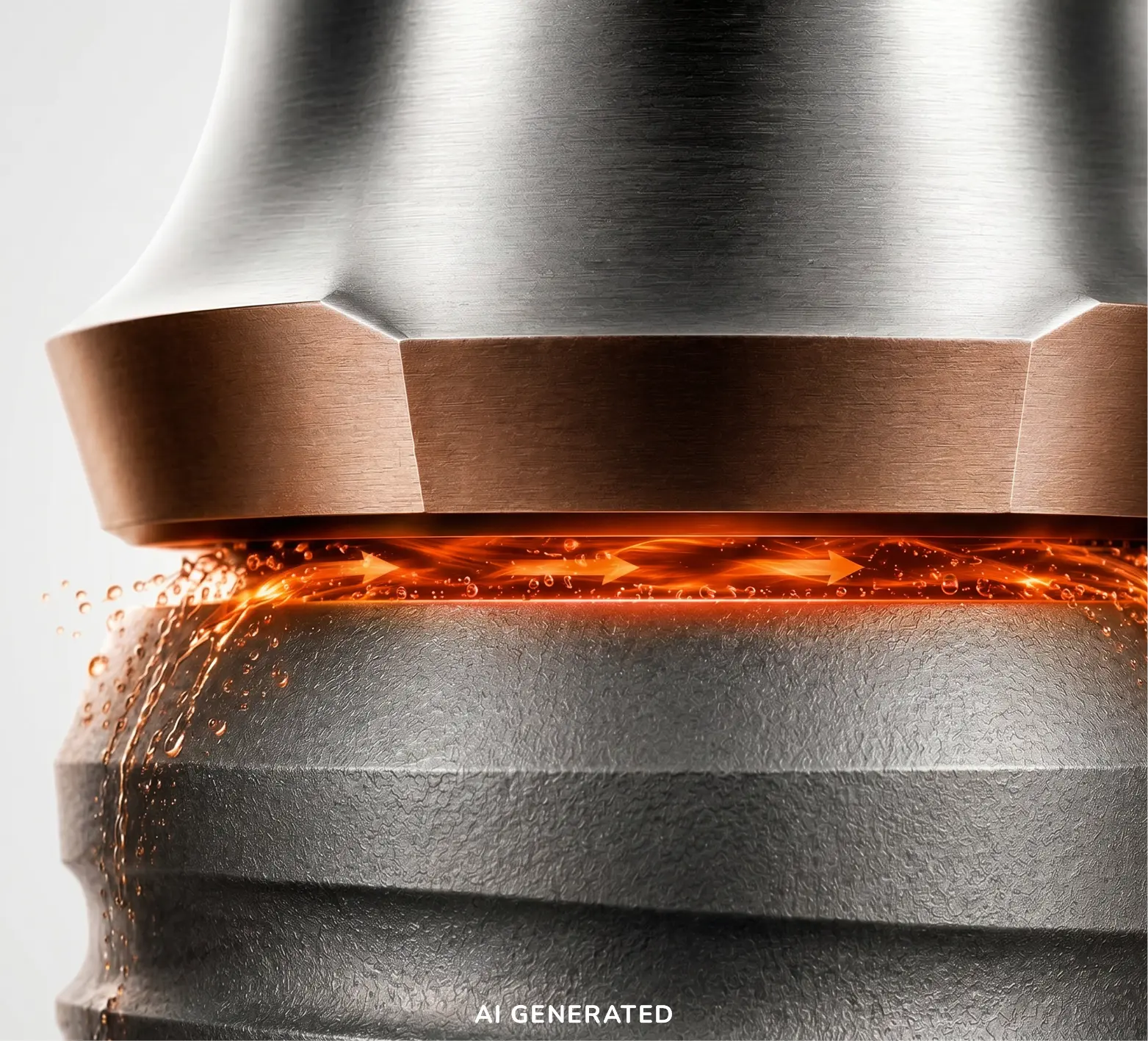
The behaviour of the implant–abutment connection under dynamic loading is well researched today. The physics behind it is logical: with imprecise connections, recurring micromovements occur under load. These lead to a permanent fluid exchange between the interior of the implant and the peri-implant tissue — the so-called “pumping effect”.
Among other things, a systematic review by the Charité Berlin (Mao et al., 2023) confirms the scale of the problem: under dynamic loading, a measurable microleakage occurs at the implant–abutment interface in almost half of the cases examined.
Histological studies show the consequences of this microleakage: inflammatory cells always accumulate in the area of the microgap, irrespective of the position of the implant. The chronic inflammatory reaction can promote bone loss around the implant. A mechanical gap thus becomes a biologically relevant risk factor.
Where tolerance is decisive
What is decisive is how precisely the component has actually been manufactured. Current studies (such as Alaqeel et al., 2026) show that the gap size at the implant–abutment interface varies considerably depending on the manufacturing level of the supplier. The greater the deviation from the reference geometry, the greater as a rule are the microgap, the microleakage and the torque loss of the connecting screw.
The biomechanical reality: a component that fits without problems on the model in the laboratory can behave completely differently under the loads in the mouth. The mechanical requirement placed on the interface remains uncompromising — irrespective of who milled the component.
Manufacturing tolerance as a medical requirement
Against this background, compliance with minimal tolerances is not mere engineering gimmickry. It is a medical necessity. Anyone who offers compatible implant components assumes responsibility for the biomechanics in the patient’s mouth. This requires a level of quality that maintains the specified reference geometries exactly and reproducibly.
Compatible does not automatically mean manufactured identically. Even small deviations from the reference geometry can impair the stability of the connection under load. The decisive question is therefore not whether a component is compatible, but how precisely the implant-prosthetic component is manufactured.
OrangeCAD faces this responsibility with implant-prosthetic components from controlled industrial manufacturing. The aim is precise and reproducible compliance with the reference geometry – as the basis for fit accuracy, long-term stability and reproducible results in everyday laboratory work.
References
Alaqeel R. et al. (2026): Microleakage and Torque Loss at the Implant–Abutment Interface in Original Versus Non-Original Abutments: An In Vitro Study. Materials (MDPI), Vol. 19(9), 1884.
Zipprich H, Weigl P, Lange B, Lauer HC. Implantologie 2007; 15(1): 31–46.
Broggini N et al. Journal of Dental Research. 2003; 82(3): 232–237. / Follow-up study: JDR 2006; 85(5): 473–478.
Mao Z et al. Microleakage along the implant–abutment interface: a systematic review and meta-analysis of in vitro studies. Int J Implant Dent. 2023; DOI: 10.1186/s40729-023-00494-y